Phenotypic plasicity as generator of phenotypic variation
Phenotypic plasticity — the ability of a single genotype to produce different phenotypes depending on the environment — is a major source of phenotypic heterogeneity. We study how plasticity shapes trait variation, its genetic basis, and how it can explain variation in host–parasite interactions.
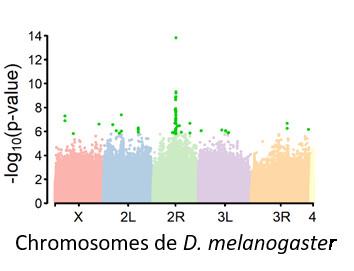
Using the Drosophila melanogaster Genetic Reference Panel (DGRP) and genome-wide association studies (GWAS), we have explored the genetic architecture of plastic responses to different environments. The tractability of Drosophila allows us to go beyond candidate gene identification and functionally validate GWAS hits, making it a powerful system for dissecting the genetics of plasticity.
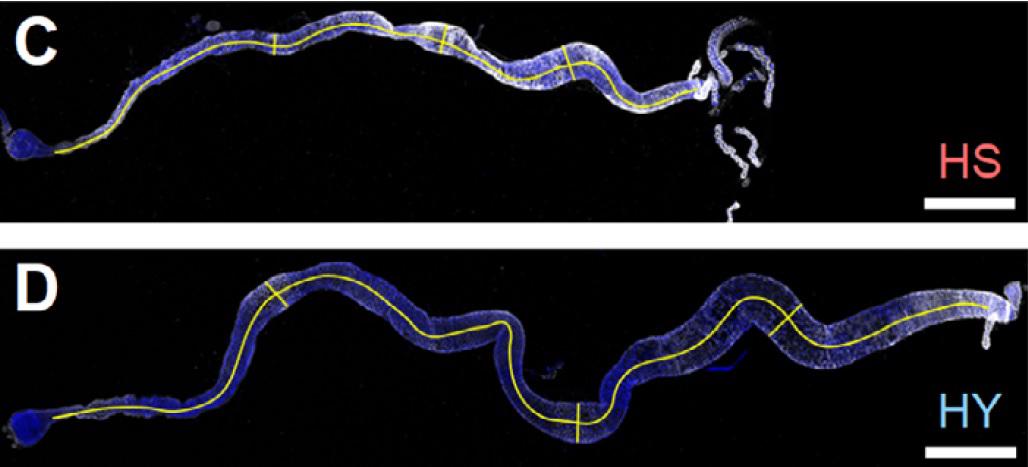
In collaboration with Nicolas Buchon (Cornell University, USA), we showed that the Drosophila midgut plastically resizes in response to dietary composition, through coordinated changes in stem cell dynamics and enterocyte size (Bonfini et al. 2021).
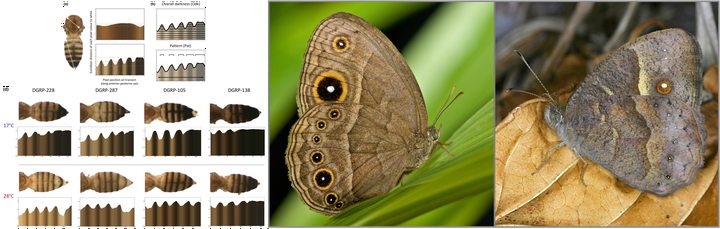
In collaboration with Patricia Beldade and Elvira Lafuente, we studied genetic variation in thermal plasticity for body size and pigmentation in Drosophila (Lafuente et al. 2018; Lafuente et al., 2024). A key finding is that plasticity is trait-specific: each phenotype responds to a given environmental variable largely independently, underpinned by its own set of genetic variants. This means plasticity can evolve independently for each trait, making a shared genetic basis for “general plasticity” unlikely. We also found that alleles reducing plasticity tend to be at lower frequency, consistent with selection favouring the maintenance of plastic responses.
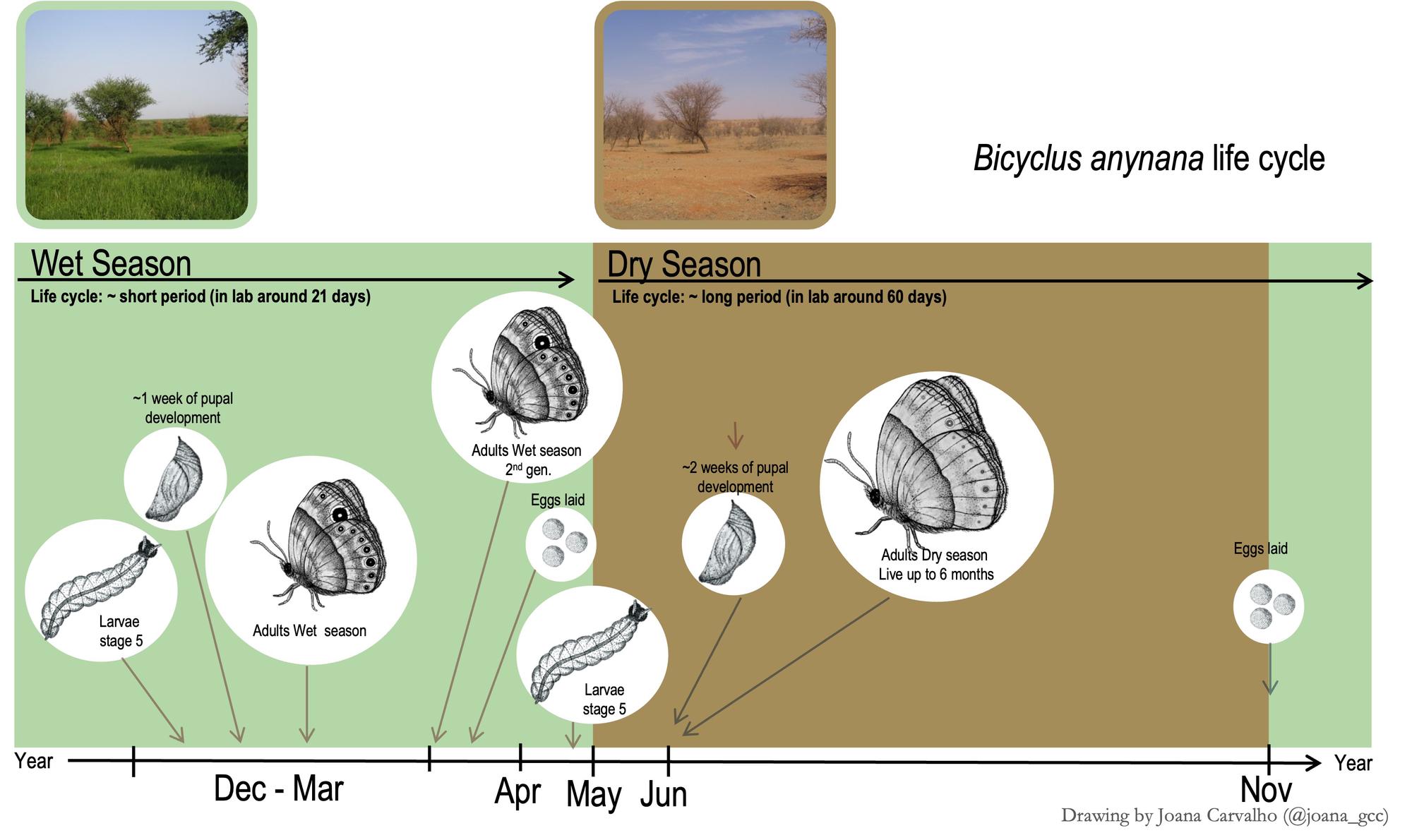
With Patricia Beldade’s group, we have extended this work to the butterfly Bicyclus anynana, a model for adaptive seasonal plasticity. We showed, through the work of Yara Rodrigues, that day and night temperatures can have non-additive effects on plastic traits, and that different traits integrate thermal information independently (Rodrigues et al. 2021). We also found that immune activation during wound healing influences the formation and pigmentation of ectopic eyespots on butterfly wings, revealing crosstalk between immune function and developmental plasticity (Jerónimo et al. 2025).
We are now extending the study of thermal plasticity to the immune system, with Guilherme Santos investigating how developmental temperature shapes immune function in Bicyclus anynana, connecting our work on plasticity with our interest in host–parasite interactions.